MCS CertifiedGas SafeTrustMarkPAS2030RECCNEBOSH Director
TrustMark Certified · South Wales + South West
Ventilation Specialists
Condensation. Mould. Stuffy rooms. These are ventilation problems. We install dMEV (mechanical extract fans), PIV (loft-mounted positive input) and background trickle vents, the right combination for your property specified at a free assessment.
Free, no-obligation assessment. Response within one working day.
Healthier Air at Home
Silent, continuous ventilation
TrustMark Certified
Government-Endorsed Quality
4.4
Google Rating
Verified reviews
500+
Installations Completed
Across South Wales and beyond
4
Industry Accreditations
For ventilation and home improvement
Free
Assessment Included
We identify the cause before any work begins
01
The Problem
Your Home Is Telling You Something
Condensation, mould and poor air quality are signs that your home cannot remove the moisture daily life generates. Modern homes are more airtight than ever, insulation, double glazing and draught-proofing are good for heat, but if ventilation has not kept pace, humidity builds and the problems follow.
A person generates around 10 litres of water vapour inside their home every day through cooking, showering, breathing and drying clothes. In a well-sealed property, that moisture has nowhere to go unless ventilation carries it out, and so it settles on cold surfaces as condensation.
Anti-mould paint and bleach-based cleaners address the symptom, not the cause. If the conditions that allowed mould to grow are still present, it comes back. Removing the underlying humidity is the only reliable fix.
Properties that have recently had loft or cavity wall insulation installed are particularly prone to new ventilation problems. The same improvements that reduce heat loss also reduce natural air infiltration, if ventilation is not upgraded alongside, indoor humidity rises and the problems follow.
Signs Your Home Has a Ventilation Problem
These warning signs indicate inadequate ventilation, not structural damp
Condensation on Windows and Cold Walls
Water droplets on glass most mornings, or damp patches forming on external walls and in corners. The fix is to reduce the moisture in the air, not to wipe down the windows.
Mould That Returns After Treatment
Black mould in bathroom corners, bedroom window reveals or kitchen walls that comes back within weeks of being cleaned. Surface treatment removes the visible growth but not the conditions causing it. Controlled ventilation removes those conditions permanently.
Stuffy Air and Lingering Smells
Cooking smells that sit in the property for hours. Rooms that feel airless despite the heating being on. A stuffiness that opening a window only temporarily relieves.
02
The Solution
Controlled Ventilation, Remove Moisture at Source
The answer to a ventilation problem is not to open more windows. It is controlled ventilation, a system that removes moisture continuously, without draughts, without you having to do anything. We install three products and specify the right combination for your property at a free assessment. We do not install MVHR.
3
Products. One tailored solution.
dMEV, PIV and background trickle vents, installed together or individually depending on what your property needs.
Product 1dMEV, Mechanical Extract Ventilation
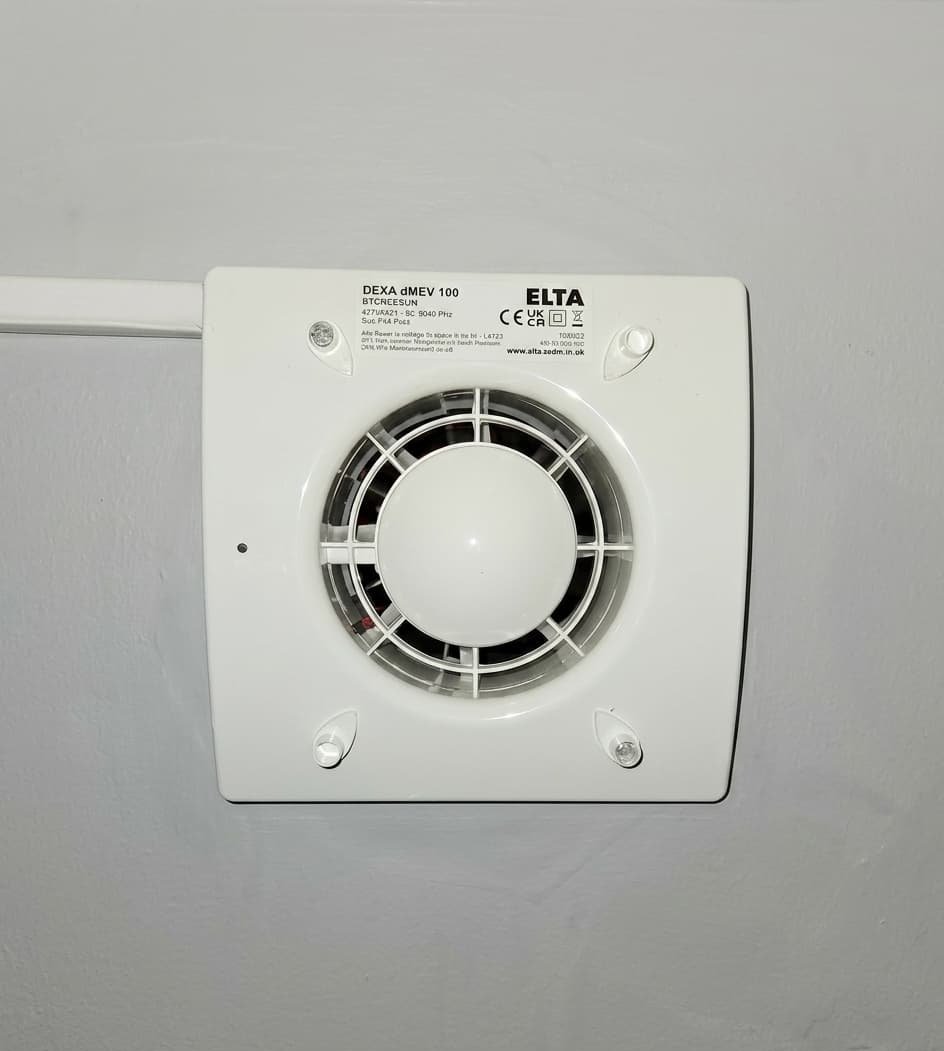
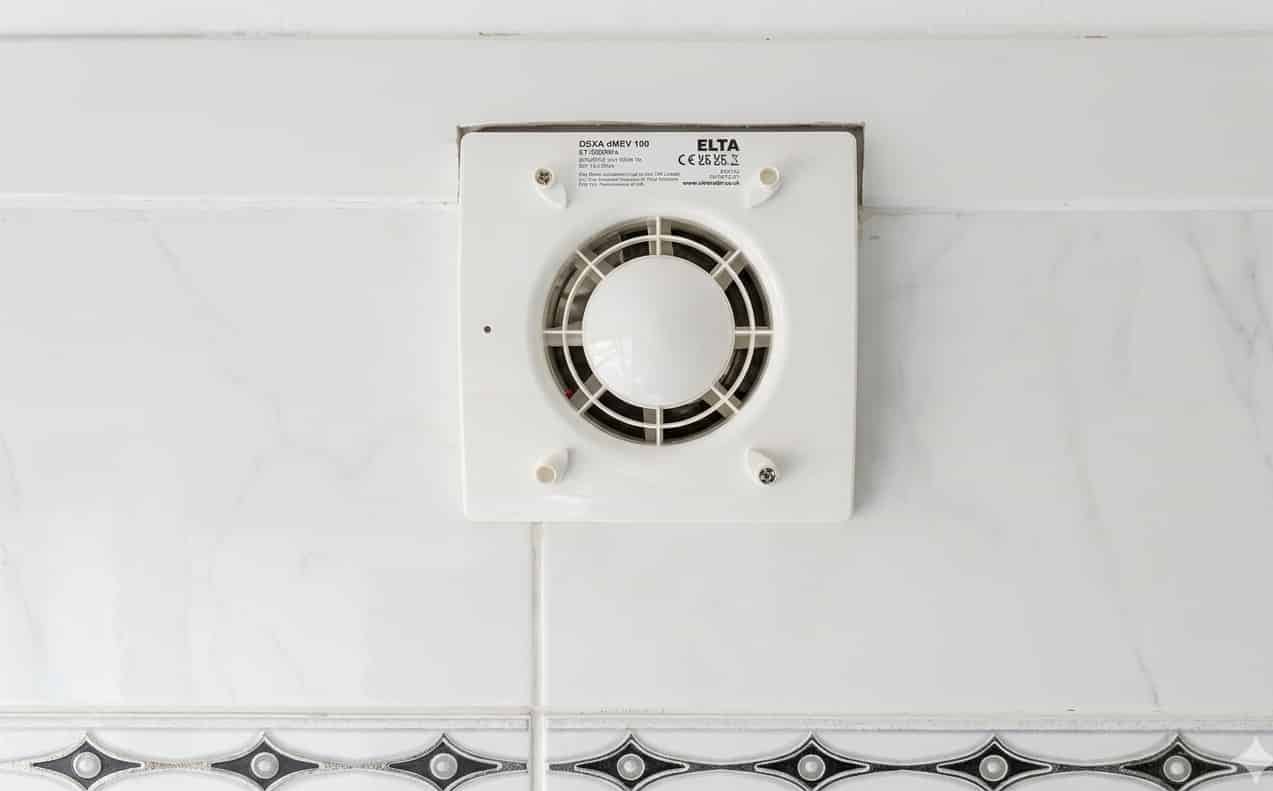
Demand-controlled extract fans installed in kitchens, bathrooms and utility rooms. They run continuously at near-silent low speed and ramp up automatically when humidity rises, during a shower, after cooking. Moisture is removed at source, before it spreads.
Product 2PIV, Positive Input Ventilation
A single loft-mounted unit that gently pressurises the whole house with filtered, tempered fresh air, displacing stale damp air through natural leakage points. Commonly specified for whole-house condensation and mould problems where extract-only ventilation would not reach every room.
Product 3Background Trickle Vents
Passive vents fitted into window frames or through external masonry, providing continuous, low-level air change at all times. No draughts, no action required. Often combined with dMEV or PIV as part of a whole-house specification.
03
The Benefits
What Controlled Ventilation Does for Your Home
The right ventilation system resolves the problems you can see, and prevents the damage you cannot.
Condensation Resolved at Source
Controlled ventilation removes moisture from the air before it reaches cold surfaces. Condensation on windows and walls stops forming because the underlying humidity is managed continuously, not periodically.
Mould Stops Returning
Mould needs high humidity to grow. Continuous low-level ventilation keeps indoor humidity at a level where mould cannot establish. Treated surfaces stay clean because the conditions that caused the mould are no longer present.
Better Air Quality Throughout
Stale air, cooking smells and indoor pollutants are continuously displaced by fresh air. Rooms feel less stuffy. The improvement is noticeable from the first week.
Protects the Building Fabric
Persistent high humidity accelerates deterioration of plasterwork, timber, insulation and wall ties. Ventilation prevents this slow, expensive damage before it takes hold.
Fully Specified Before Any Work Starts
Our free assessment identifies the cause of your problem and produces a written specification before any work is agreed. You know exactly which products (dMEV, PIV, trickle vents, or a combination) will be installed, where, and what to expect.
04
Is It Right for You
Who Ventilation Is, and Is Not, the Right Solution For
We will tell you at assessment whether ventilation will fix your problem, or whether the cause is something else.
Good fit
Condensation forming on windows, cold walls or ceilings on a regular basis
Mould in bathrooms, kitchens or bedrooms that comes back within weeks of being cleaned
A property that has been recently insulated and now has new condensation or mould problems
Stuffy rooms or persistent cooking and bathroom odours that do not clear quickly
A surveyor or damp specialist has already identified inadequate ventilation as the cause
A property with older or ineffective extract fans in kitchens or bathrooms
Not the right solution
Damp caused by structural water ingress, a leaking roof, failed pointing or a bridged damp proof course. Ventilation will not fix a structural leak. The leak must be repaired first.
A property that already has adequate modern mechanical ventilation, if the problem has a different structural cause, we will identify this at assessment and tell you plainly.
From the initial survey through to the completed installation, every stage was handled professionally. The team explained what they were doing and why. The work was clean and tidy throughout. Could not recommend more highly.
Luke Jenkins
Swansea, South Wales
Google Review
"Professional, knowledgeable and honest"
Took the time to explain exactly what the problem was and what the options were. Did not try to oversell. The installation was neat and the result was clear within a few weeks. Exactly what you want from a home improvement company.
Dan Evz
Cardiff
Google Review
"From survey to completion, impressive throughout"
From the initial survey to completion, First Choice Energy were organised, polite and thorough. They identified a ventilation issue we had been dealing with for years and fixed it properly. The difference is noticeable. Very happy with the result.
Sarah B.
Bristol
Google Review
05
The Process
From Assessment to Healthier Air, Here Is What Happens
Clear stages, no surprises, and no work starts without your agreement.
01
Free Assessment
We visit the property and assess where moisture is being generated, how air moves through the building, and which measures will resolve the problem.
At your home
02
Written Specification
Following the assessment, we provide a written specification confirming which products are recommended, where each unit will be installed, and the outcome you can expect. No work proceeds without your written agreement.
Sent by email
03
Installation
Extract fans are fitted in kitchens, bathrooms and utility rooms as specified. Background ventilation is installed through window frames or external masonry as required. Work is clean and tidy throughout.
1 to 2 days typical
04
Commissioning
All units are tested and set correctly. Demand-controlled fans are calibrated to your property. You receive a handover briefing on how the system works and what to expect in the first few weeks.
Same day
05
Follow-Up Where Applicable
For whole-house approaches, we offer a follow-up check after the first season to confirm the system is performing as expected. Most homeowners notice the improvement within days of installation.
Optional
06
Why Us
Why Homeowners in South Wales Choose First Choice Energy
A ventilation specialist is not the same as a general builder who fits a fan. The right diagnosis, the right product, properly installed, that is what we deliver.
01
We Diagnose Before We Sell
Our free assessment identifies whether your problem is a ventilation problem or something else entirely. If ventilation will not fix it, we tell you. If it will, we specify exactly what is needed, in writing, before any work is agreed.
02
TrustMark and Trading Standards Certified
TrustMark is the government-endorsed quality scheme for home improvement. Trading Standards approval covers sales, marketing and contract conduct. Both provide independent oversight and consumer recourse if something goes wrong.
03
NEBOSH Qualified Director
Aaron Davies holds a NEBOSH qualification in Health and Safety Management for Construction, awarded June 2025. Safety standards on every FCE job are set from the top, including working in confined spaces and at height on ventilation installs.
04
Full Retrofit Service
FCE installs loft insulation, cavity wall insulation, cavity wall extraction and ventilation. If your assessment reveals that another measure caused your ventilation problem, we can handle both in a single project, one company, one standard, no handoffs.
Installation Case Study
New Loft Insulation, New Condensation Problem, Solved
A Swansea homeowner·3-bed semi, Swansea, South Wales·dMEV installation, kitchen, bathroom, en-suite
The Problem
Loft insulation installed six months previously. Within weeks, condensation appeared on bedroom windows every morning and mould developed in the corner of the main bedroom. The insulation had made the property airtight enough to stop the natural air change that previously carried moisture out.
The Assessment
Free assessment confirmed the cause: a drop in natural air infiltration following the loft installation, combined with inadequate bathroom extraction. No structural damp. A straightforward ventilation problem with a straightforward solution.
The Installation
Three dMEV units installed, kitchen, main bathroom and en-suite. Background trickle vents added to three bedroom windows. Full installation completed in one day, commissioned and handed over the same afternoon.
The Result
Condensation on windows cleared within two weeks. The mould patch was treated and has not returned. The homeowner reported the house feeling fresher, and the loft insulation investment was preserved rather than undone.
1 day
Total installation time
3
dMEV units installed
0
Mould recurrence
07
Certified
Certified for Home Improvement and Ventilation Work
TrustMark and Trading Standards certification means independent oversight of our work, our sales process and our contracts. You have recourse if anything goes wrong.
TrustMark
Government-endorsed quality scheme for home improvement. Covers workmanship standards, consumer protection and independent redress.
Trading Standards Approved
TSI Approved Code of Practice. Independent oversight of sales conduct, marketing claims and contract terms.
Competent Persons Scheme
Self-certification for building regulations compliance, held through Blueflame. Electrical and building work certified without a separate building notice where applicable.
NEBOSH Director
Aaron Davies, NEBOSH Health and Safety Management for Construction, June 2025. Safety standards set from the top on every installation.
08
Pricing
Honest Pricing, Confirmed at Your Free Assessment
The cost of a ventilation installation varies depending on the scope, the number of rooms, and whether you need extract fans only, PIV, or a whole-house approach including background ventilation. Indicative ranges below. Exact price confirmed at your free assessment before any work is agreed.
All prices include supply and installation. Finance options are available including 0% APR for qualifying periods and up to 120 months at 9.9% APR, subject to status.
Single room
Single Extract Fan
One dMEV unit in a kitchen, bathroom or utility room. Typically the starting point for addressing a localised condensation or mould problem.
Indicative supply and fit
£250 – £450
Exact price confirmed at free assessment
Price includes: supply and installation of one dMEV unit, commissioning and handover.
Most Common
Whole house
Full Ventilation Package
Multiple dMEV units across all wet rooms, or PIV loft unit for whole-house coverage, plus background trickle vents. The comprehensive approach for properties with a whole-house humidity problem.
Indicative supply and fit
£800 – £1,800
Exact price confirmed at free assessment
Price includes: survey, multiple dMEV units or PIV loft unit, background trickle vents, commissioning and handover.
Finance Available
Finance options include 0% APR for qualifying periods and up to 120 months at 9.9% APR, with no upfront cost options available. Subject to status. We explain all options at your free assessment, there is no pressure to proceed and no commitment required at survey stage.
09
FAQ
Questions We Hear Often
Ventilation is often misunderstood. These questions address the ones we are asked most often, including the cases where ventilation is not the right answer.
Still have a question that is not covered here? Call us on 0808 502 2308 or book your free assessment and we will answer it in person.
What ventilation systems do you install?
Three types of controlled domestic ventilation, specified at assessment based on what your property needs. dMEV (demand-controlled mechanical extract ventilation): near-silent fans in kitchens, bathrooms and utility rooms that run continuously at low speed and ramp up when humidity rises. PIV (positive input ventilation): a single loft-mounted unit that gently pressurises the whole house with filtered fresh air, displacing stale damp air. Background trickle vents: passive vents in window frames or through external masonry providing continuous low-level air change. We do not install MVHR.
What is background ventilation and how is it different from opening a window?
Background ventilation, provided by trickle vents in window frames or passive wall vents through the external masonry, allows a continuous, low-level air change across the whole property at all times. Unlike opening a window, which provides a large but intermittent air change only when you remember to do it, background ventilation is always present, works even when windows are closed, and is designed not to cause draughts. It provides the steady baseline air exchange that prevents humidity building up in the first place.
How is controlled ventilation different from just opening windows?
Opening windows is an unreliable strategy for managing indoor humidity. It relies on someone remembering to open the right windows at the right time, is uncomfortable in cold weather, and creates large uncontrolled air changes rather than the steady low-level exchange that prevents condensation. Controlled ventilation works continuously without requiring action from the occupants, and is designed to manage moisture at a consistent, comfortable level throughout the year.
Will ventilation fix the condensation and mould in my home?
If the condensation and mould is caused by inadequate ventilation, which is the case in the majority of domestic properties, then yes, controlled ventilation will resolve it. Extract fans remove moisture at source. Background ventilation prevents humidity building up. However, if the damp is caused by structural water ingress such as a leaking roof, failed pointing or a bridged damp proof course, ventilation will not fix it. We identify the cause at assessment and will tell you clearly if ventilation is or is not the right solution for your property.
How noisy are the extract fans?
Modern demand-controlled extract fans (dMEV units) are designed to run continuously at very low speed and are near-silent during normal operation. At their lowest speed setting, most homeowners are not aware the fan is running. They do ramp up in response to high humidity, for example during a shower, but return to low speed automatically within a few minutes. This is very different from older single-speed extract fans, which were louder and only ran when switched on manually.
Do I need dMEV, PIV, trickle vents, or a combination?
It depends on your property and the nature of the problem. The most common whole-house specification combines dMEV (in the wet rooms) with background trickle vents throughout. For homes with whole-house condensation where extract-only ventilation cannot reach every room, PIV is often a better fit, a single loft unit gently pressurises the whole house with fresh air. Some properties need just one of the three. The free assessment confirms what you actually need. We do not install MVHR.
My home has just been insulated and now I have condensation, why, and will ventilation fix it?
This is a very common problem. Loft insulation, cavity wall insulation and draught-proofing all make a property more airtight. The natural air leakage that used to carry moisture out of the building is reduced or eliminated. Indoor humidity rises, and condensation begins forming on cold surfaces. The answer is not to remove the insulation, it is to add controlled ventilation to replace the natural air exchange that was lost. Mechanical extract fans and background ventilation installed after insulation work will resolve the problem. See our loft insulation and cavity wall insulation pages for more.
How long does ventilation installation take?
A single mechanical extract fan installation in a bathroom or kitchen typically takes between one and three hours. A whole-house approach covering multiple rooms and including background ventilation will take longer, usually a full day for a standard three-bedroom property. We confirm the expected installation time at your free assessment. You do not need to vacate your property during the work.
Get Started Today
Healthier Air Starts With a Free Assessment.
A free, no-obligation assessment is all it takes to find out what is causing your ventilation problem, what the right solution is, and what the installation will cost. We give you a clear answer at assessment, and there is no pressure to proceed.
Free assessment, no charge, no obligation
dMEV, PIV or trickle vents, specified to your property
Written specification before any work is agreed
TrustMark and Trading Standards certified throughout
NEBOSH qualified director, safety standards from the top