PAS2030 Certified · South Wales & South West

Your Loft Room, Warm All Year Round

For converted loft rooms that are freezing in winter and unbearable in summer. We install the SWIP RIRI System (BBA certified, PAS2035 compliant), one integrated solution across every surface in the room. 0% VAT on insulation.

BBA Certified System
PAS2035 / PAS2030 Compliant
0% VAT on Insulation
0808 502 2308

Free no-obligation survey. Response within one working day.
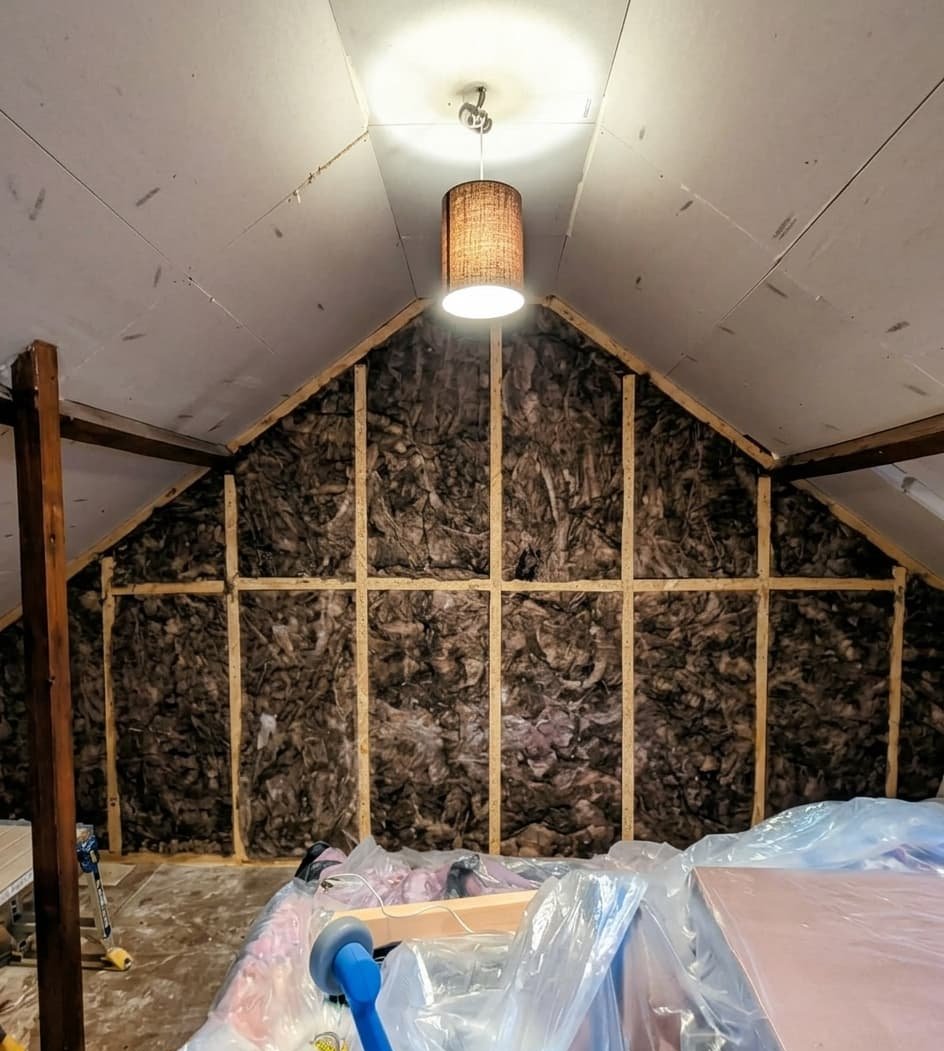
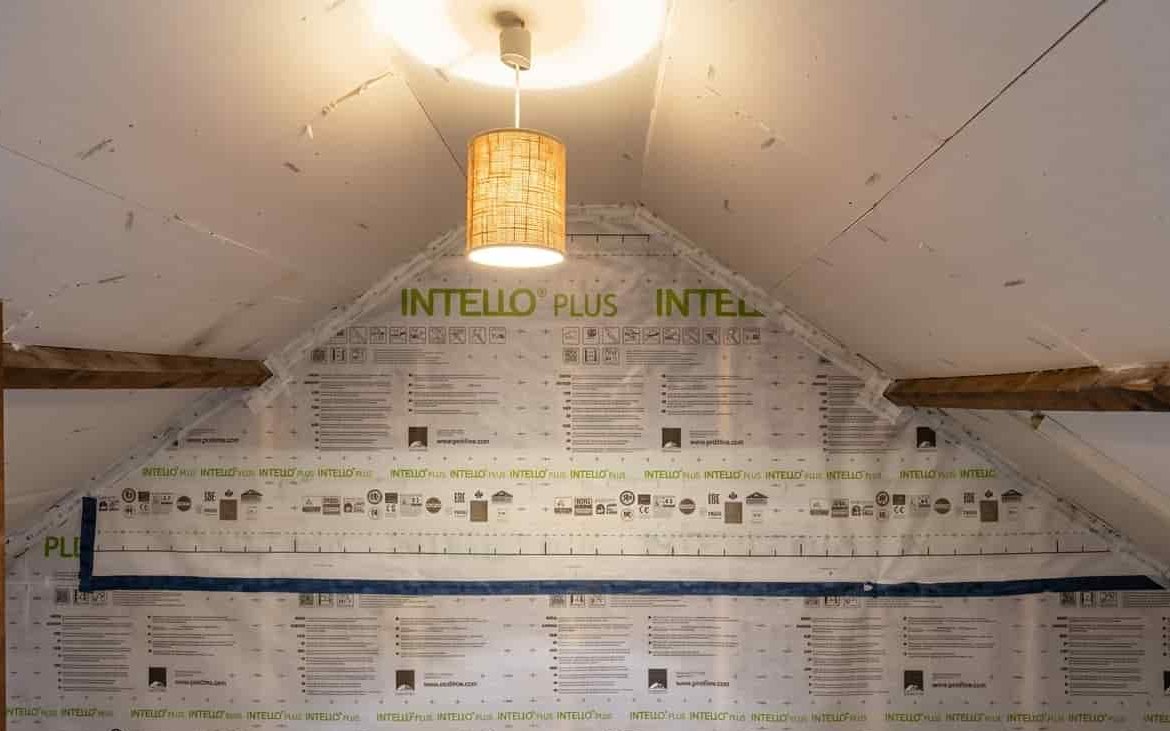
Room in roof insulation between rafters
Up to £300/yr Saved
Typical converted loft room
TrustMark Registered
Government-endorsed quality
4.4
Google Rating
Verified customer reviews
500+
Installations Completed
Across South Wales and beyond
10
Industry Accreditations
More than any local competitor
£300
Up to £300/yr Saving
Typical converted loft room
01
The Problem

A Room That Works in October But is Unbearable in January

A converted loft room is surrounded by roof structure on two or three sides. In winter, heat conducts directly out through every sloping rafter surface simultaneously. In summer, the same surfaces become solar collectors, turning the room into something closer to a greenhouse than a bedroom. If your converted loft room is too cold to use in winter and too hot to use in summer, the problem is not your radiator or your windows. It is the roof structure itself.

You cannot fix this with thicker curtains or a bigger radiator. The heat is leaving through the rafter bays, not through the window or the air gap under the door. Blocking convection does not address conduction through the roof timbers and the gaps between them.
Older conversions have little or no rafter insulation. Loft conversions done before modern insulation standards, particularly those completed before the early 2000s, were often built to minimum or no insulation requirements. A room that was habitable when first converted may have become increasingly uncomfortable as energy costs have risen.
The EPC often reflects it. An uninsulated or poorly insulated room-in-roof drags down the energy rating of the whole property. If your EPC band is lower than your neighbours on a similar street, the roof may be the reason.
Where Your Home Loses Heat
Proportion of heat lost by source, uninsulated property
Walls
35%
Roof
25%
Windows
25%
Floor
15%
For an entire house, the roof accounts for around 25% of heat loss. For a room-in-roof surrounded by rafter slopes on two or three sides, the proportion is far higher. Every sloping surface in the room is a direct heat path to the outside.
02
The Solution

The SWIP RIRI System — One Specification for Every Surface

We install the SWIP RIRI System. It is BBA certified and fully PAS2035:2019 and PAS2030:2019 compliant. The reason we use it: a converted loft room has five different surface types, sloping roof, gable wall, dormer cheek, window reveal, residual cold loft. Each needs the correct insulation, vapour control and detailing. Off-the-shelf PIR between rafters does not solve the whole problem.

The SWIP RIRI system is a complete integrated solution. Sloping pitched roof: 62.5mm PIR insulated plasterboard. Gable walls: 95mm SWIP IWI System (thermally-engineered composite studs). Window reveals: 12.5mm or 27mm SWIP Reveal Board. Common stud walls: SWIP Omnifit System (glass mineral wool). Residual cold loft: SWIP Omnifit Roll plus Loft Roll. All materials BBA certified. A SWIP vapour control layer runs continuously on the warm side, managing condensation risk correctly.
25%
of whole-home heat loss through the roof
For a room-in-roof surrounded by rafter slopes on two or three sides, the proportion lost through that single room is substantially higher
1
Survey and specification
ABBE qualified assessor confirms rafter depth, existing insulation condition, moisture risk, and which SWIP sub-systems apply to your specific room. You receive a written specification and fixed quote before any work begins.
2
SWIP RIRI installation
Interior finish removed where required. Each surface treated with the correct SWIP sub-system, rafter slopes with 62.5mm PIR insulated plasterboard, gable walls with 95mm SWIP IWI, reveals with SWIP Reveal Board, residual loft with SWIP Omnifit Roll. SWIP vapour control layer sealed continuously on the warm side.
3
Plastering and finishing
12.5mm plasterboard screw-fixed and finished with a skim coat. Room left structurally complete, clean and ready to decorate. Painting and wallpapering are the customer's responsibility after handover.
Room in roof insulation installed between rafters in a converted loft space
03
The Benefits

What Changes After Room in Roof Insulation

The Room Works Year-Round
The most immediate change for most customers. A room that was too cold to sleep in through January and too hot to use through July becomes genuinely comfortable in both seasons. Not marginally better, properly usable.
Lower Heating Bills
The roof accounts for around 25% of whole-house heat loss. In a converted loft room surrounded by rafter slopes on two or three sides, the proportion is higher still. Typical annual saving up to £300 for a standard 3-bed property with a single converted loft room.
Stops Interstitial Condensation
Warm, moist air from inside the room can migrate into a cold, uninsulated rafter structure and condense, causing damp and rot in the roof timbers over time. The SWIP vapour control layer, fitted continuously on the warm side as part of every installation, eliminates this risk.
Works in Summer Too
The rigid PIR layer in the SWIP RIRI System is highly effective at blocking solar gain as well as heat loss. The same insulation that stops heat escaping through the rafters in January significantly reduces the solar heat penetrating through the roof in July. Most customers describe the summer improvement as equally noticeable.
Improved EPC Rating
An uninsulated or poorly insulated room-in-roof is a significant drag on the property's EPC. Full SWIP RIRI treatment typically delivers a meaningful EPC band improvement, particularly significant if the property currently sits in band E, F or G. Matters for rental compliance and future sale value.
04
Is It Right For You

Honest About What This Will and Won't Fix

Likely a good fit
You have a habitable converted loft room, bedroom, office or playroom, that is uncomfortably cold in winter and uncomfortably hot in summer
The conversion was done by a previous owner, or was completed before modern insulation standards tightened in the 2000s
There is little or no insulation visible between the rafters, or the insulation that is there is thin and inadequate
Your EPC band is lower than expected for your property type, and the room-in-roof is identified as a contributing factor
You plan to use the room year-round as a usable living space and currently cannot
You have a solid-walled property and want to address both the walls and the roof at the same time, we can quote for both at the survey
Probably not a fit
You have a cold, inaccessible loft space above a flat ceiling, that is a different product entirely. Standard mineral wool loft insulation is the right measure. See our loft insulation page.
The survey finds significant condensation damage, damp or rot in the existing roof timbers. These need to be addressed before insulation can be fitted, installing over active moisture issues creates further problems
The rafters are very shallow (under 75mm) and a full-fill installation is not possible without significant structural work, we will tell you honestly at survey if this is the case
The room is not converted and not habitable, if it is an open, cold roof void above a flat ceiling, standard loft insulation is the correct approach
4.4
Google rating · Verified customer reviews
View All Google Reviews
"Absolutely first class from start to finish"
From the initial survey through to installation, the whole team were professional and knowledgeable. They explained exactly what they were doing and why, and the quality of the work was excellent. Would recommend without hesitation.
Luke Jenkins
Swansea, South Wales
Google Review
"Professional, knowledgeable and honest"
They came out, surveyed the property properly, and gave me a straight answer about what needed doing and what didn't. No upselling. The installation was clean and tidy, and the difference in the room immediately was noticeable.
Dan Evz
Cardiff
Google Review
"From the initial survey to completion"
Every step of the process was handled professionally. The survey was thorough, the installation was done to a high standard, and everything was left clean and tidy on completion. The team knew what they were doing and explained each stage clearly.
Sarah B.
Bristol
Google Review
05
The Process

From Free Survey to Finished Room

A clear process with no surprises. We tell you what to expect at every stage before work begins.

01
Free Survey
We visit the property, inspect the room, measure the rafter bays, check rafter depth, and identify any existing insulation or moisture issues. No obligation, no pressure. You receive a written quote and specification within one working day.
Within 5 working days
02
Written Quote
Fixed-price written quote covering survey findings, specification, U-value target, scope of works, and total cost. No hidden extras. Finance options outlined if applicable. You have time to read and consider, no pressure tactics.
Within 1 working day
03
Scheduling
Once you accept, we book a date that works for you. We give you a clear briefing on what to move out of the room beforehand and how long to expect us to be on site. The room needs to be clear and accessible before we start.
Arranged on acceptance
04
Installation Day
We remove the interior finish, fit PIR between and over the rafters, install the vapour control layer, and re-board the room. Dust sheets used throughout. Tools and materials cleared at the end of each day. Most standard rooms completed in one to two days.
1 to 2 days typically
05
Plastering and Finishing
SWIP RIRI installation completed with 12.5mm plasterboard screw-fixed and finished with a skim coat. Room left structurally complete and ready for decoration. Painting and wallpapering are the customer's responsibility after handover. All documentation provided including the installation certificate.
Day 2 or day 3
06
Completion and Handover
Walk-through on completion. We explain the installation, answer any questions, and hand over all relevant documentation. Your EPC can be updated once the work is registered. We are available after completion if you have any questions.
Same day as finish
06
Why First Choice Energy

The Difference Behind the Job

Most local installers have two or three accreditations. We have ten. Most are single-service. We offer eleven domestic services across South Wales and the South West.
01
PAS2030 Certified, Every Insulation Job
PAS2030 is the retrofit quality standard required for all publicly funded insulation work. We apply it to every installation regardless of funding route, it is how we work, not just a box to tick for certain schemes.
02
NEBOSH Qualified Director
Aaron Davies, our director, holds a NEBOSH qualification in Health and Safety Management for Construction. No local competitor leads with this. Every job is run with that standard of oversight from the top of the company.
03
ABBE Qualified Assessors
Our assessors hold ABBE qualifications covering retrofit and energy assessment. This means the survey that precedes every insulation job is carried out by someone with the formal training to specify it correctly, not just to sell it.
04
South Wales Roots, Regional Knowledge
Llanelli-based, operating across Carmarthenshire, Swansea, Cardiff, Newport, Bristol and beyond. We know the housing stock in this region, older properties, pre-war construction, and the specific challenges that come with them.
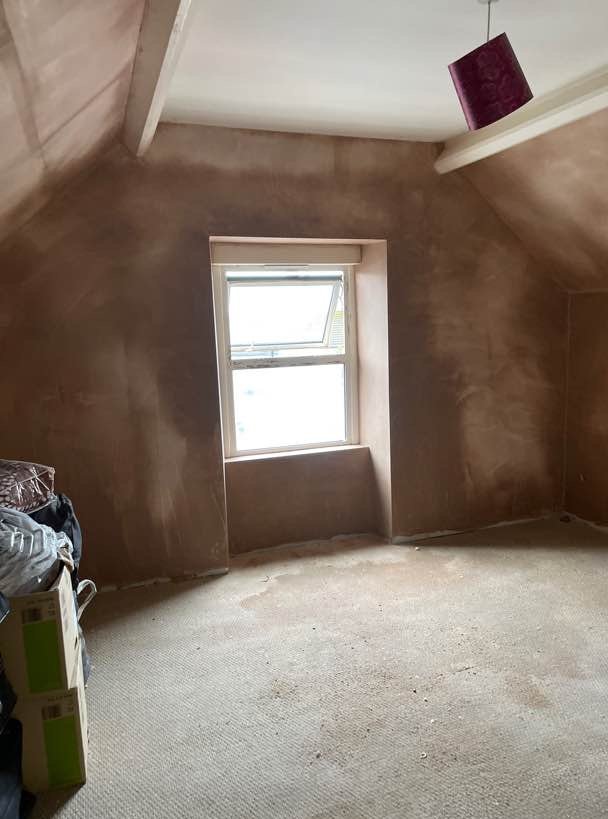
Room in roof insulation case study, converted loft room after insulation and finishing work
Real Customer · Cardiff

A Converted Bedroom That Couldn't Be Used From November to March

Cardiff · Pre-2000 loft conversion · 3-bedroom semi-detached
The Problem
Loft conversion completed by previous owners in the late 1990s. The third bedroom, used as a child's bedroom, became unusable from November onwards. Electric heater running constantly but the room still couldn't hold temperature. Too hot to sleep in from June. Thin layer of previous insulation found to be inadequate and poorly fitted at survey.
The Work
Full SWIP RIRI System installation. Rafter slopes treated with 62.5mm PIR insulated plasterboard, gable wall with 95mm SWIP IWI, window reveals with SWIP Reveal Board, residual eaves loft with SWIP Omnifit Roll. SWIP vapour control layer fitted continuously on the warm side. 12.5mm plasterboard and skim finish throughout. 2-day installation.
The Result
Room held temperature comfortably through the first winter post-installation without supplementary electric heating. Noticeably cooler in the following summer. EPC rating improved by two bands. Electric heating cost removed from annual running costs.
~£280
Estimated annual saving
2 days
Total installation time
2 bands
EPC improvement
07
Accreditations

Independently Verified. Every One.

These are the accreditations relevant to room in roof insulation. Not displayed for show, each one represents an independent standard we are held to on every job.

PAS2030 Certified
The retrofit quality standard applied to all our insulation installations. Required for publicly funded retrofit work and applied by us to every job regardless of funding.
TrustMark
Government-endorsed quality scheme. TrustMark registered businesses are independently assessed for quality, customer service and trading practices.
Trading Standards Approved
TSI Approved Code membership. Independent consumer protection covering our selling practices and complaint handling across all services.
ABBE Qualified
Our assessors hold ABBE qualifications covering retrofit assessment and energy surveying. The right specification starts with a properly qualified assessor.
Competent Persons Scheme
Blueflame registered. Allows self-certification for building regulations compliance, meaning your installation is properly documented without requiring separate local authority sign-off.
NEBOSH, Director
Aaron Davies, our director, holds a NEBOSH qualification in Health and Safety Management for Construction. No comparable local installer leads with this at director level.
08
Pricing

Honest Indicative Ranges

Room in roof insulation is priced per project, not per square metre. Every room is different, rafter depth, existing insulation, access, and surface area all affect the final cost. The SWIP RIRI System is zero-rated for VAT. The ranges below give a realistic starting point. All figures are confirmed in a fixed written quote after your free survey.

Smaller Room
Single-Pitch Loft Room
A converted room with one main sloping surface, typically a smaller bedroom or compact home office. Straightforward rafter bay access, standard rafter depth.
Indicative range
£800 – £1,500
0% VAT included. Fixed price at free survey.
SWIP RIRI System (BBA certified)
Free survey and written specification
SWIP vapour control layer
Plasterboard and skim finish
PAS2030 sign-off
Finance Available
0% APR finance available on shorter terms. Longer terms available up to 120 months at 9.9% APR. No large upfront payment required in many cases. Finance options are outlined in your written quote. Subject to status.
09
FAQ

Questions We Hear Most Often

Straightforward answers to the most common questions about room in roof insulation, including the questions most companies avoid answering.

Still have questions?
Call us or request a free survey. We will give you a straight answer, including if room in roof insulation is not the right measure for your property.
0808 502 2308
How much does room in roof insulation cost?
Room in roof insulation is priced per project. A small single-pitch converted room typically costs between £800 and £1,500. A standard room-in-roof with two sloping sides typically costs between £1,200 and £2,500. Larger or more complex rooms with multiple slopes can cost £2,500 or more. The final price depends on the area of rafter surface, rafter depth, the condition of any existing insulation, and the access available. 0% VAT included. We provide a fixed written quote after your free survey.
What is the difference between room in roof insulation and standard loft insulation?
They are completely different products for different parts of the building. Standard loft insulation, rolls of mineral wool laid between the floor joists, is for a cold, inaccessible loft space above a flat ceiling. It insulates the ceiling of the rooms below the loft. Room in roof insulation is for a habitable converted loft room, where the insulation goes between and over the sloping rafters that form the walls and ceiling of that room. If you have a room you actually use in your loft, you need room in roof insulation, not standard loft rolls.
What type of insulation do you install?
The SWIP RIRI System, BBA certified and fully PAS2035:2019 and PAS2030:2019 compliant. It is a complete integrated specification with five sub-systems, one for each surface type in a converted loft room. Sloping pitched roof uses 62.5mm PIR insulated plasterboard. Gable walls use 95mm SWIP IWI System (thermally-engineered composite studs, BBA 15/5262). Window reveals use 12.5mm or 27mm SWIP Reveal Board. Common stud walls use the SWIP Omnifit System (glass mineral wool). Residual cold loft space uses SWIP Omnifit Roll plus Loft Roll. A SWIP vapour control layer runs continuously on the warm side, eliminating interstitial condensation risk. Every material is BBA certified. This is why we treat each surface with the correct sub-system rather than a single generic product, it is how condensation and cold bridging are managed properly.
Will the room look different after installation?
In most cases the room will look almost identical. The insulation is fitted between and over the rafters, a new vapour control layer is added, and the room is then re-boarded and plastered. The ceiling and sloping surfaces may sit fractionally lower than before due to the counter-batten layer, typically no more than 30 to 50mm. We discuss any visible changes with you at the survey stage so there are no surprises.
How long does the installation take?
A standard room-in-roof installation typically takes one to two days. A smaller single-pitch room can often be completed in a day. Larger rooms or those with complex geometry, multiple slopes, dormers, or restricted rafter access, may take two to three days. We give you a clear timeline in your written quote before work starts. The room needs to be cleared of furniture and belongings before we begin.
Will this help with condensation and damp in the roof space?
Yes, if the installation is specified correctly. A vapour control layer is fitted as a mandatory part of every installation we carry out. This prevents warm, moist room air from migrating into the cold rafter structure and condensing, the mechanism behind interstitial condensation. However, if existing condensation damage to the roof timbers is significant at the time of survey, that needs to be addressed first. We will tell you honestly at survey if this is the case.
Will this help in summer heat as well as winter cold?
Yes, and for many customers the summer improvement is as significant as the winter one. Rigid PIR insulation is highly effective at reducing solar gain. The same layer that stops heat escaping through the rafters in January significantly reduces the amount of solar heat penetrating through the roof in July and August. A room-in-roof that was previously unbearable through summer typically becomes comfortable and usable year-round after installation.
Is there a risk of condensation after insulation is fitted?
Not if the installation is specified and fitted correctly. The vapour control layer fitted as part of every installation eliminates the risk of interstitial condensation. If your rafters are very shallow and a full-fill installation is not achievable, an alternative ventilated cold roof detail may be required. We will specify the correct approach at survey and explain the reasoning clearly before any work is agreed.
Should I also get loft insulation on the cold part of the loft at the same time?
Yes, if there is a cold loft space adjacent to your room-in-roof, for example, a flat-ceilinged eaves area next to the habitable room, this should be insulated at the same time for maximum benefit. Standard mineral wool at 270mm depth is the appropriate product for that cold space, not PIR. We can survey and quote for both in the same visit. See our loft insulation page for details on that service.
Free Survey · No Obligation

Stop Using Heaters to Heat a Room That Shouldn't Need Them

If your converted loft room is cold in winter and overheated in summer, the cause is almost certainly in the roof structure. A free survey confirms the issue and gives you a fixed written quote. No commitment, no pressure.

Free home survey, no obligation
SWIP RIRI System (BBA certified)
PAS2035 / PAS2030 compliant installation
0% VAT on insulation
Fixed-price quotation, no hidden costs
Finance options available
0808 502 2308
Free, no-obligation survey. Response within one working day. No pressure.
Get Your Free Survey
We will be in touch within one working day to arrange a convenient time.
Domestic
Commercial
Enquiry Sent
We will be in touch within one working day to arrange your free survey.