South Wales & South West

Cavity Wall Extraction Specialists

Persistent damp returning after treatment is often caused by failed or saturated cavity fill. Free borescope survey first. We extract any material type, Mineral Wool, EPS beads, Urea Formaldehyde foam, PIR, PUR, Phenolic, with specialist equipment. PAS2030 certified.

Free borescope assessment
PAS2030 certified
No-obligation report
0808 502 2308
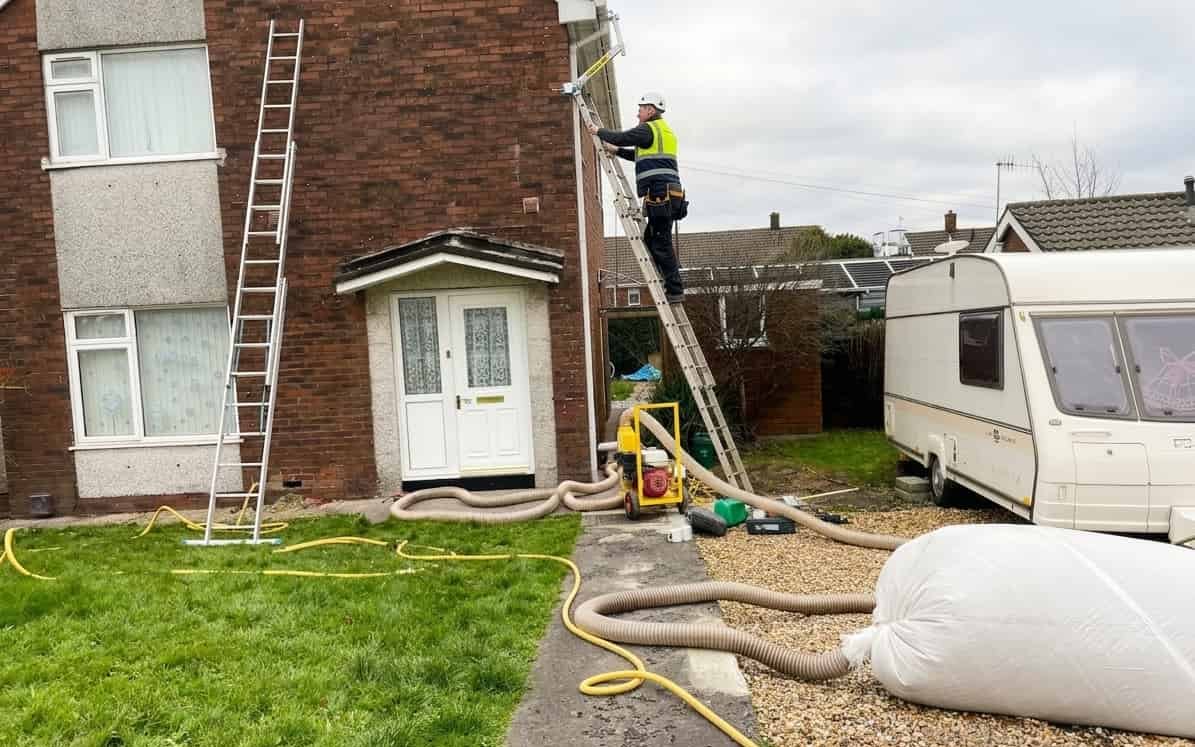
Cavity wall extraction in progress
Free Assessment Included
Borescope survey before any work

TrustMark Certified
4.4
Google Rating
5
Accreditations Held
750+
Properties Extracted
Free
Borescope Survey
01 The Problem

Your Walls Are Damp Because the Insulation Has Failed

Cavity wall insulation installed years ago can fail in several ways. The product degrades, it was installed incorrectly, or water ingress has saturated it over time.

When cavity wall insulation fails, it does not simply stop working. Wet insulation bridges the air gap inside the cavity and draws moisture from the external masonry directly to the internal wall face. The result is persistent damp that cannot be fixed with anti-mould paint, re-plastering or improved ventilation, because the source is inside the wall structure itself.

The only permanent fix is to remove the failed material. That requires specialist extraction equipment, a trained team, and a proper survey first.

Damp returns after treatment
You have replastered, painted with anti-mould products, or improved ventilation, but the damp keeps coming back in the same spots.
Mould comes back every time
Mould that returns within weeks of treatment almost always has a structural moisture source behind it, not a surface condensation problem.
Cold walls despite insulation
Internal walls that feel cold to the touch even though the cavity was filled decades ago, suggesting the insulation has compacted, saturated or been displaced.
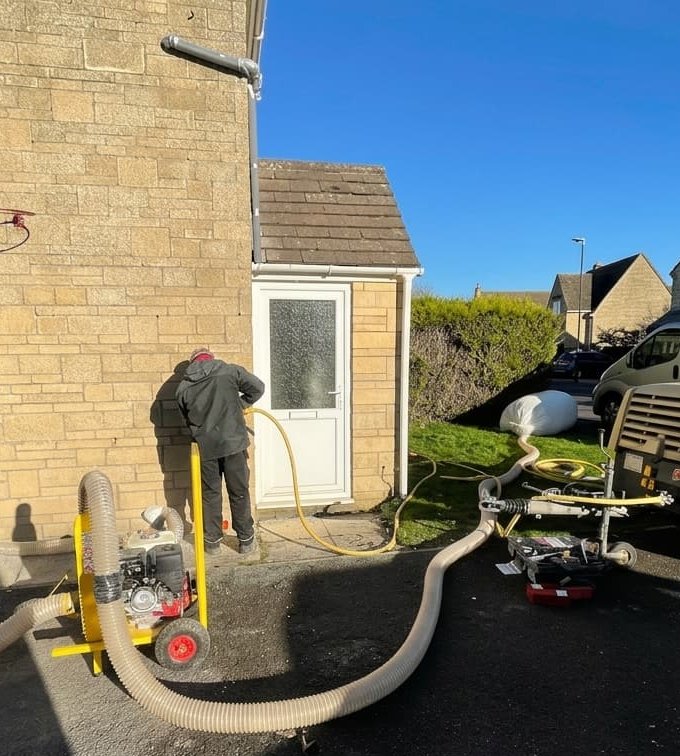
Cavity wall extraction equipment in use on a South Wales property, specialist removal of failed insulation
02 The Solution

Specialist Extraction. Proper Survey First. No Guesswork.

1 Day
Most extractions completed within a single working day

We begin with a borescope survey: a small camera is inserted through a drilled hole in the external masonry to visually confirm the condition and material type of the existing cavity fill. You receive a written report before any extraction work is agreed. If extraction is not needed, we tell you that too.

1
Borescope assessment
A small camera is inserted through a drilled hole to visually confirm the condition and material type in the cavity. You receive a written report and recommendation before any extraction is agreed.
2
Extraction, any material type
High-powered vacuum extraction equipment removes the failed fill through small-diameter holes drilled at regular intervals in the external masonry. We extract Mineral Wool (MW), Expanded Polystyrene beads (EPS / Airpop), Urea Formaldehyde foam (UF), Polyisocyanurate (PIR), Polyurethane (PUR) and Phenolic (PF). All extracted material is collected and disposed of correctly.
3
Re-pointing
All drilled holes are filled and re-pointed with matching mortar. The external finish is restored as closely as possible to the original masonry.
4
Post-extraction inspection and options
The cavity is inspected to confirm it is clear. A drying-out period of several weeks is recommended before any decision on re-insulation. Re-insulation with a suitable modern product is quoted separately if appropriate.
03 Why Extract

What Changes After Extraction

Removing failed insulation does not just stop the damp. It removes the structural moisture bridge that was causing it.

Persistent damp resolved at the source
Wet insulation in the cavity is the cause of the moisture bridge, not a symptom of something else. Removing it eliminates the source permanently, not just the visible effect.
Stops mould returning for good
Mould that keeps coming back despite surface treatment almost always has a structural moisture source driving it. Extraction removes that source, so treated surfaces stay clean.
Protects the wall structure long-term
Wet insulation left in place long-term accelerates deterioration of the masonry, internal plaster and wall ties. Extraction removes the cause of that progressive damage.
Opens the door to modern re-insulation
Once the failed material is out and the cavity has dried, modern cavity wall insulation can be installed correctly and confidently. Re-insulation is quoted separately once the extraction is complete.
Professional assessment before any work starts
Every extraction starts with a borescope survey. You will not be sold an extraction if the insulation is in good condition or if a different cause is identified during the survey.
04 Honest Guidance

Is Cavity Wall Extraction Right for You?

Extraction is the right answer in some cases, not all. We would rather give you an honest answer than charge for a service you do not need.

Extraction is likely a good fit if:
  • You have persistent damp patches on internal walls that have not responded to anti-mould paint, replastering or improved ventilation.
  • Mould keeps returning in the same areas after being treated.
  • A surveyor or damp specialist has identified failed cavity wall insulation as the underlying cause.
  • You know the cavity was filled and the material has aged significantly, been saturated, or was installed in an era known for problematic products such as urea formaldehyde foam.
  • An insulation installer has told you extraction is needed before new cavity wall insulation can be fitted.
Extraction may not be the answer if:
  • The cavity has not been inspected and you are not certain it is filled. Start with an assessment to confirm what is there before assuming extraction is needed.
  • You have a solid-walled property with no cavity. Extraction is not applicable to solid walls. If you are looking for insulation options for solid walls, see our internal wall insulation page.
  • You have damp but the cause has not been identified as cavity insulation. A damp survey should identify the actual cause before any remediation work is carried out.
05 Customer Reviews

What Customers Say

4.4
Google Reviews, First Choice Energy Ltd
View All Google Reviews
Luke Jenkins
Swansea, South Wales

Absolutely first class from start to finish. Turned up when they said they would, explained everything clearly and left the site spotless. Could not fault the service at all.

First Choice Energy
Dan Evz
Cardiff

Professional, knowledgeable and honest. They did not try to oversell anything, just explained what was needed and got on with the job. Really impressed with the standard of work.

First Choice Energy
Sarah B.
Bristol

From the initial survey to completion, the whole team were excellent. Everything was explained at every stage and they were tidy throughout. Very happy with the result.

First Choice Energy
08 Case Study

Damp Treated Twice. Still Coming Back. Fixed.

Swansea, South Wales

3-Bed Semi, Persistent Damp on Internal Walls Despite Two Previous Treatments

The homeowner had been dealing with damp patches in two downstairs rooms for several years. Anti-mould paint had been applied twice and the rooms had been replastered once. The damp returned within a few months each time. A damp specialist eventually identified the likely cause as failed cavity wall insulation, which had been installed in the 1980s.

Our surveyor confirmed the diagnosis with a borescope inspection: the original mineral wool insulation had become heavily saturated across most of the rear elevation. Extraction was carried out over a single day. The cavity was left to dry for six weeks. The homeowner confirmed that by the following autumn, the damp had fully resolved.

~£750
Extraction cost
1 Day
Extraction completed
Resolved
Damp, following autumn
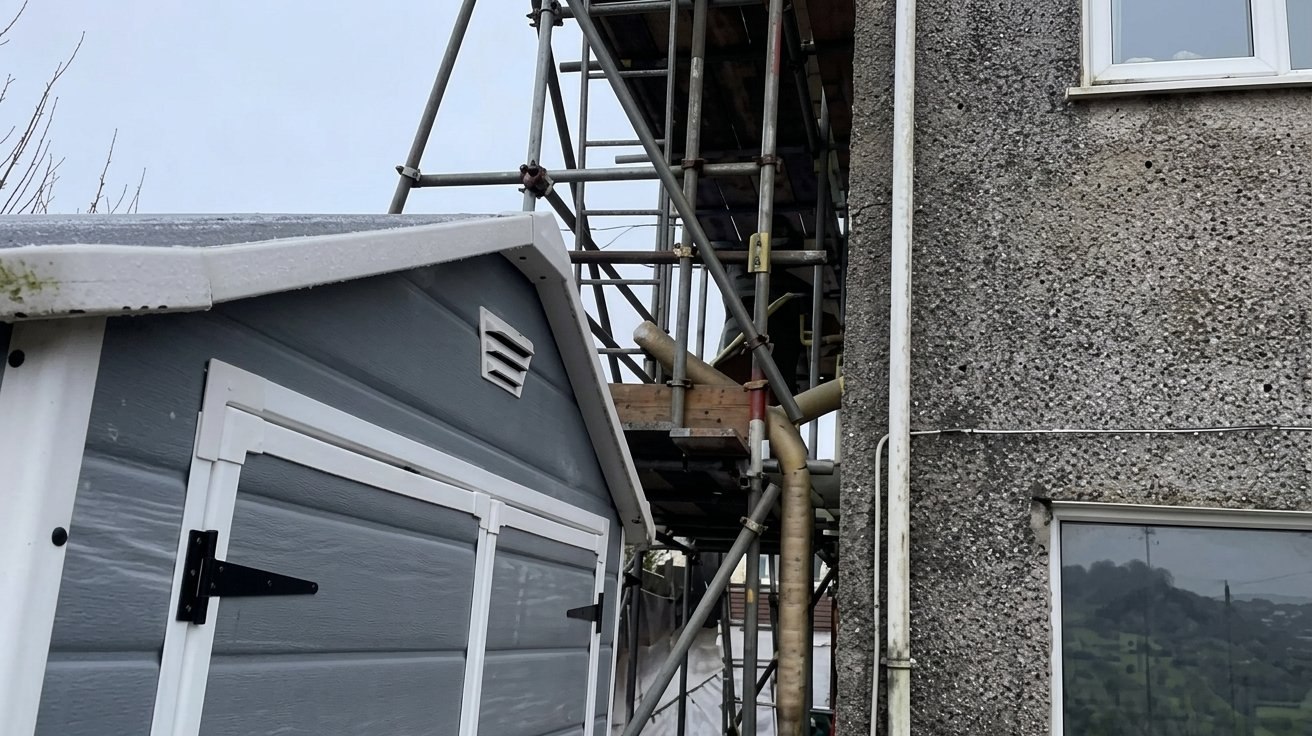
Cavity wall extraction case study — scaffolding and equipment in place at a South Wales property
09 Accreditations

Certified to the Standards That Matter

Cavity wall extraction is specialist work. These accreditations confirm we hold the certifications required to carry it out correctly.

PAS2030 Certified
The quality standard required for retrofit insulation measures. Issued by Blueflame. Confirms installation meets current technical and quality requirements.
TrustMark
Government-endorsed quality scheme. Vetted for technical competence, customer service and trading practice. Not all installers hold this.
Trading Standards Approved
TSI Approved Code. Consumer protection covering fair trading, contracts and complaints handling. Independently assessed.
Competent Persons Scheme
Blueflame membership. Allows self-certification for building regulations compliance without requiring a separate local authority inspection.
NEBOSH Director
Aaron Davies holds a NEBOSH qualification in Health and Safety Management for Construction. Issued June 2025. Unique in our local market.
10 Honest Pricing

What Does Cavity Wall Extraction Cost?

Extraction is priced per property following the borescope survey. Cost varies with property size, the amount of material to remove, the material type, and site access conditions.

Smaller Property
Terraced or Smaller Semi-Detached
£500 – £900
Typical for a terraced property with up to around 50m² of external cavity wall area to treat. Price confirmed following survey.
  • Borescope survey included
  • Full extraction on confirmed day
  • Re-pointing of all drilled holes
  • Written post-extraction report
Standard to Larger Property
Semi-Detached or Detached
£900 – £1,500+
Typical for a standard semi-detached or detached property. Larger or more complex properties may exceed this range. Confirmed by survey.
  • Borescope survey included
  • Full extraction on confirmed day
  • Re-pointing of all drilled holes
  • Written post-extraction report
Re-insulation is quoted separately. If the cavity is suitable for re-insulation after extraction and drying, a separate quote for modern cavity wall insulation will be provided. Re-insulation is not part of the extraction price. Finance options are available subject to status.
11 FAQs

Cavity Wall Extraction, Common Questions

Honest answers to the questions we are asked most often.

Our extraction service is material-agnostic. We remove every common cavity fill product installed in UK properties: Mineral Wool (MW), Expanded Polystyrene beads (EPS / Airpop), Urea Formaldehyde foam (UF), Polyisocyanurate (PIR), Polyurethane (PUR), and Phenolic (PF). The borescope survey confirms the material type so we bring the correct extraction approach to site. Different fill types behave differently during removal, which is why a general builder cannot do this work, specialist vacuum equipment and the right technique matter.
Cavity wall extraction is the process of removing existing cavity wall insulation that has failed. Typical scenarios include old mineral wool, loose-fill or blown insulation that has become wet, compacted, displaced or contaminated over time. Small-diameter holes are drilled at regular intervals in the external masonry, a high-powered vacuum system draws the failed material out through each hole in turn, and the holes are re-pointed with matching mortar once the cavity is clear. It is a specialist service that requires specialist equipment and cannot be carried out by a general builder.
The most common signs are persistent damp patches on internal walls that return after treatment, mould that keeps coming back in the same places, and internal walls that feel cold to the touch despite supposedly being insulated. These symptoms can have other causes, which is why we always carry out a borescope survey before recommending extraction. The survey gives visual confirmation of the insulation condition so the diagnosis is based on evidence, not assumption.
Small-diameter holes are drilled in the external masonry at regular intervals, following the same pattern used in the original insulation installation. A high-powered vacuum extraction system is connected to each hole in sequence and the failed material is drawn out and collected. Once the cavity is confirmed clear, all drilled holes are filled and re-pointed with mortar matched to the existing finish as closely as possible.
The drill holes are filled and re-pointed with mortar that is matched to the existing finish. On most properties the re-pointing is barely visible after weathering. On older or more distinctive brickwork, some variation in mortar colour is possible. We are upfront about this. The holes used are the same diameter and follow the same pattern as the original installation, so the approach is consistent with what was done when the insulation was first put in.
Most extraction jobs on standard domestic properties are completed within a single working day. Larger properties or those with more complex access may take longer. We confirm the expected timescale with you before the work begins. The borescope assessment is typically a separate, shorter visit carried out in advance.
In many cases, yes. Once the failed material has been removed and the cavity has been given time to dry out thoroughly (typically several weeks), modern cavity wall insulation can be installed correctly. Re-insulation is a separate service quoted on its own merits after the extraction is complete and the cavity is dry. If the underlying cause of the failure was structural water ingress rather than product failure, we would be honest about whether re-insulation is advisable.
If failed cavity wall insulation is the confirmed cause of the damp, extraction resolves it in the vast majority of cases. However, damp in walls can have multiple causes, and if the survey identifies a different root cause (structural water ingress, defective guttering, bridging at ground level, etc.) we will tell you clearly. That is why the borescope survey before any extraction work is non-negotiable for us. We will not extract insulation that is in good condition, and we will not tell you extraction will fix something it cannot fix.
Not necessarily. Some cavity wall insulation installed decades ago is still performing well, particularly mineral wool installed correctly in properties with suitable cavities. Age alone is not a reason to extract. The product type matters: urea formaldehyde foam, which was widely used in the 1970s and 1980s, has a much higher failure rate and is known to cause problems in many properties. The best way to find out is a borescope survey, which gives visual confirmation of the current condition rather than relying on age as a proxy.
12 Get Started

Book Your Free Borescope Assessment

Every extraction starts with an honest survey. We confirm what is in the cavity, assess its condition, and give you a written report. No work is agreed until you have seen the evidence.

Free borescope survey included
No extraction agreed without your consent
PAS2030 and TrustMark certified
South Wales, South West and West England
NEBOSH qualified director
0808 502 2308
Free assessment. No obligation. We will tell you honestly if extraction is not what you need.
Book Your Free Assessment
We will confirm the condition of your cavity wall insulation and let you know what is needed.
Domestic
Commercial
Thank you. We will be in touch shortly to arrange your assessment.